
From Planning & Designing to Producing a Destination Wedding in Cabo
When couples begin planning a destination wedding, one of the first things they often start collecting is inspiration: tablescapes, floral arrangements, ceremony settings, beautiful reception spaces, lighting installations, and all those little details that make a wedding feel special.
Soon enough, the questions about tables, chairs, linens, flowers, and décor begin to follow.
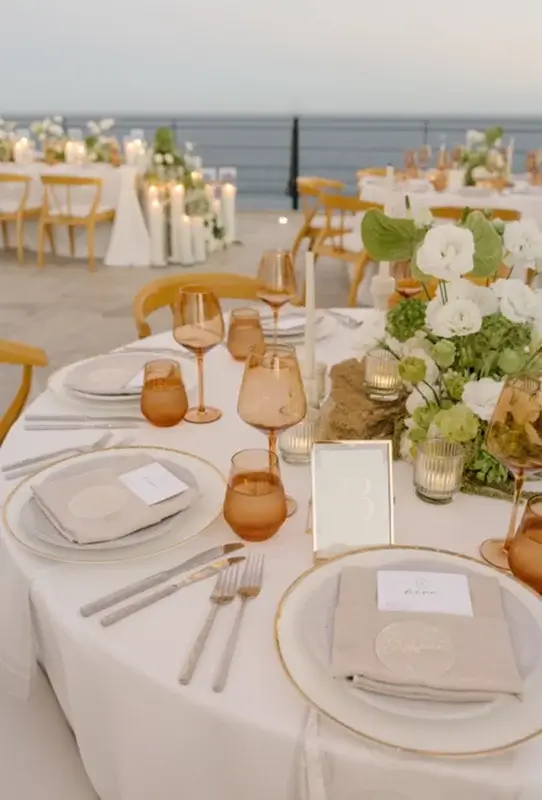
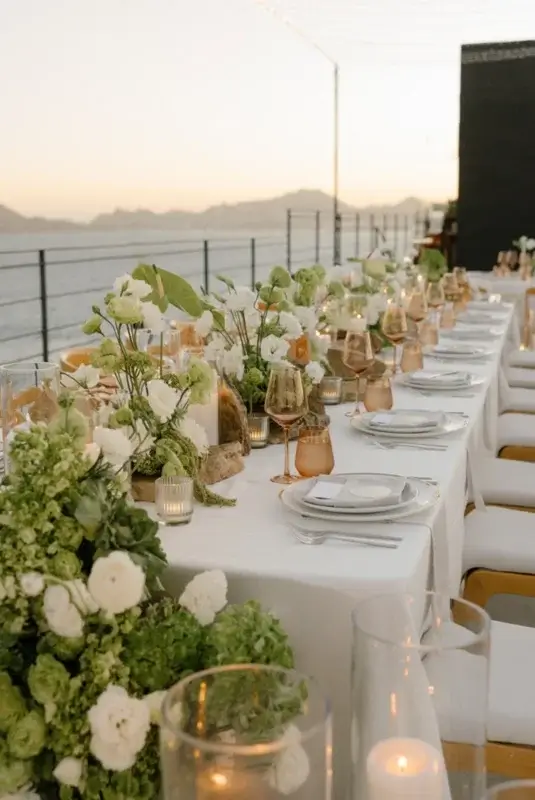
But there is something that happens long before any of those items are selected, priced, or reserved.
In our experience planning and designing weddings in Los Cabos, the first step is not choosing rentals. It is understanding the wedding as a whole: where it will take place, how the couple wants their guests to experience it, what the location can offer, and what will be required to bring everything together.
A beautiful wedding design is not simply a collection of beautiful objects. It is the result of a series of decisions, each one influencing the next.
And that is where the work really begins.
First Things First: Finding the Right Setting
Before developing the aesthetic direction of a wedding, we need to establish its foundation: the location.
In Cabo, there are several ways to host a destination wedding, and each comes with different requirements, advantages, logistical considerations, and financial commitments.
The venue is not just a backdrop for the celebration. It influences the layout, the guest experience, the design possibilities, the production requirements, and ultimately, the overall investment.
Here are three of the most common options we work with.
Private Villa Weddings
A private villa offers an entirely different experience from a traditional hotel wedding. It allows the couple and their guests to enjoy a private property, creating a more intimate and personalized environment for the celebration.
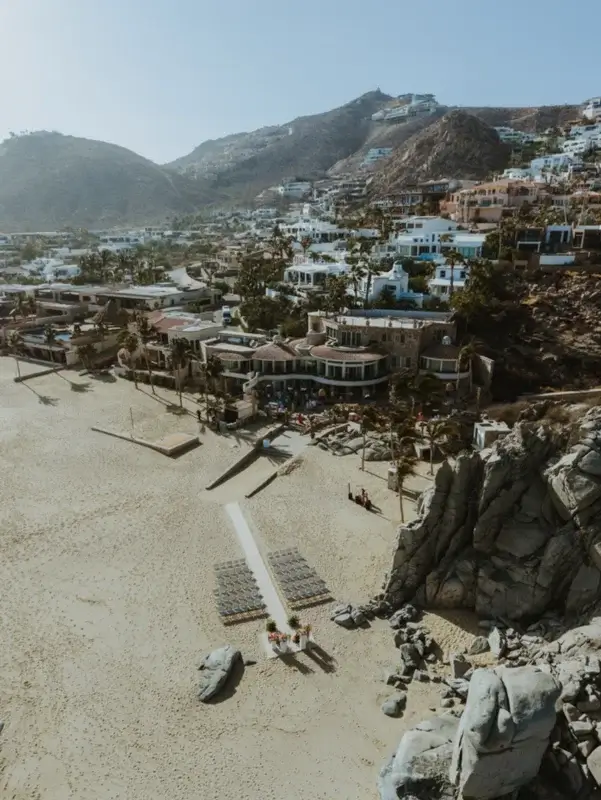
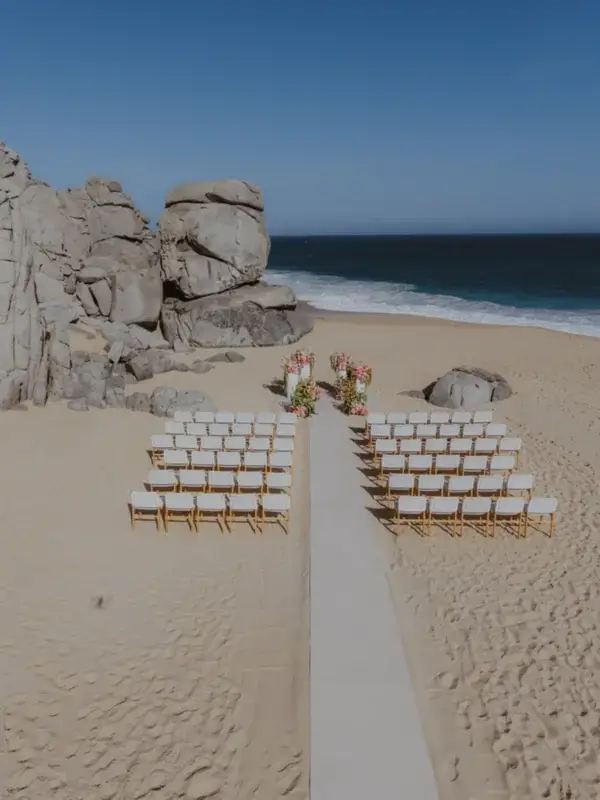
However, a villa is first and foremost a private vacation rental. Hosting a wedding there involves additional requirements beyond simply reserving the property.
Depending on the villa and its location, the costs generally include:
- Minimum Rental: Most villas require a minimum stay of three or four nights.
- Event Fee: This may be equivalent to one night’s rental or a separate fixed fee, generally ranging from $5,000 to $15,000 USD.
- HOA Fee: If the property is located within a gated community, an additional fee may apply, typically ranging from $500 to $3,000 USD.
- Beach Permit: Applicable to certain properties in Pedregal.
- Security Deposit: A refundable deposit may also be required.
These requirements are important to establish from the beginning because they form part of the overall wedding investment, before we even begin discussing flowers, entertainment, or reception production.
Some of the private villa celebrations we have had the pleasure of planning and designing include:
Hotel Weddings
For many destination wedding couples, a hotel is the most convenient option. Everyone can stay on the same property, transportation between accommodations and wedding events is simplified, and many of the essential services are already available.
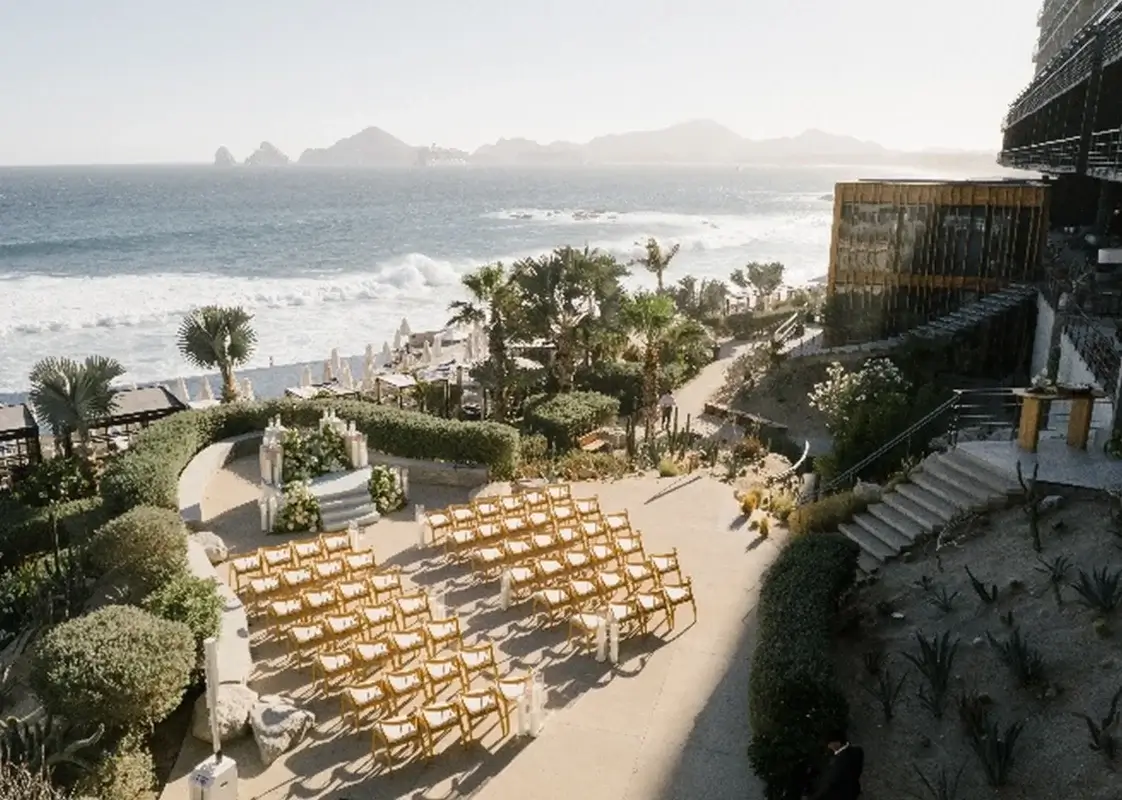
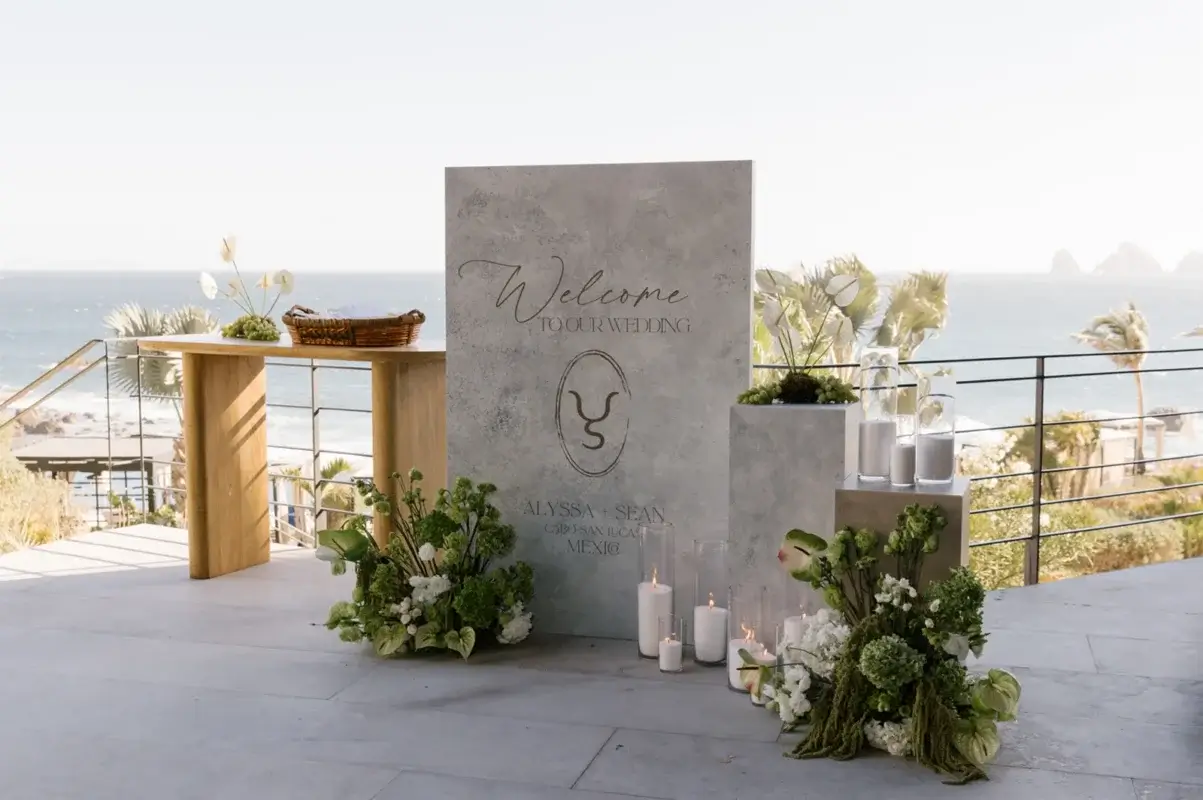
However, hotels generally have specific requirements for hosting a private wedding celebration.
Two of the most important are:
Room Block Commitment
A room block is an agreement between the wedding couple and the hotel, guaranteeing a certain number of guest rooms for a specified period.
Depending on the property, the minimum commitment may start at approximately 15, 20, or 25 rooms for three consecutive nights. The required number of rooms is generally determined by the size of the wedding and the hotel’s policies.
Food & Beverage Commitment
This is the wedding’s food and beverage investment, which may include:
- Five or six hours of open bar.
- Passed appetizers during cocktail hour.
- A seated dinner menu.
- Late-night snacks.
- Wedding cake or dessert table.
The investment varies considerably depending on the hotel category, menu selections, beverage package, and service requirements.
As a general reference, the following are average starting ranges for the food and beverage components described above:
- European Plan Hotels: Approximately $350–$650 USD per person, plus applicable taxes and service charges.
- All-Inclusive Hotels: Approximately $225–$295 USD per person or more, depending on the property and package.
These are planning references rather than fixed hotel rates, and individual proposals will vary.
A few examples of weddings we have planned and designed at European Plan hotels include:
And some examples at all-inclusive resorts:
Restaurants and Dedicated Wedding Venues
Los Cabos has some extraordinary oceanfront, oceanside, and ocean-view restaurants that can also serve as wedding venues.
For couples who want a beautiful setting without necessarily committing to a hotel room block, this can be an excellent alternative.
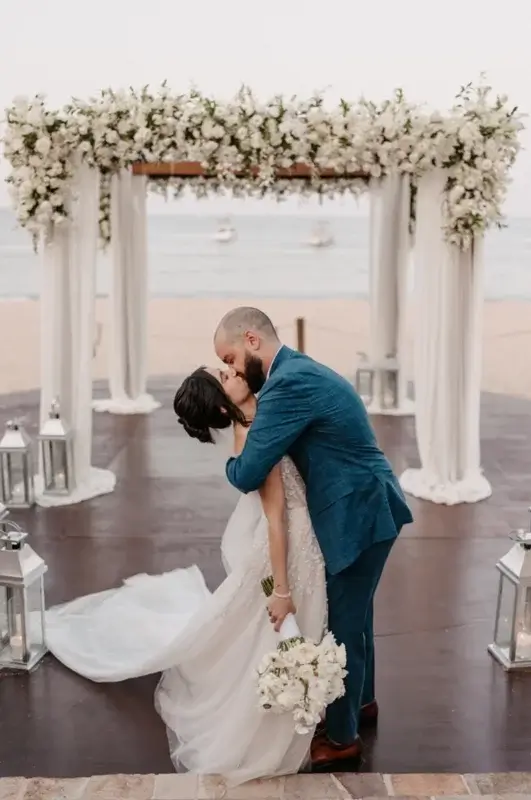
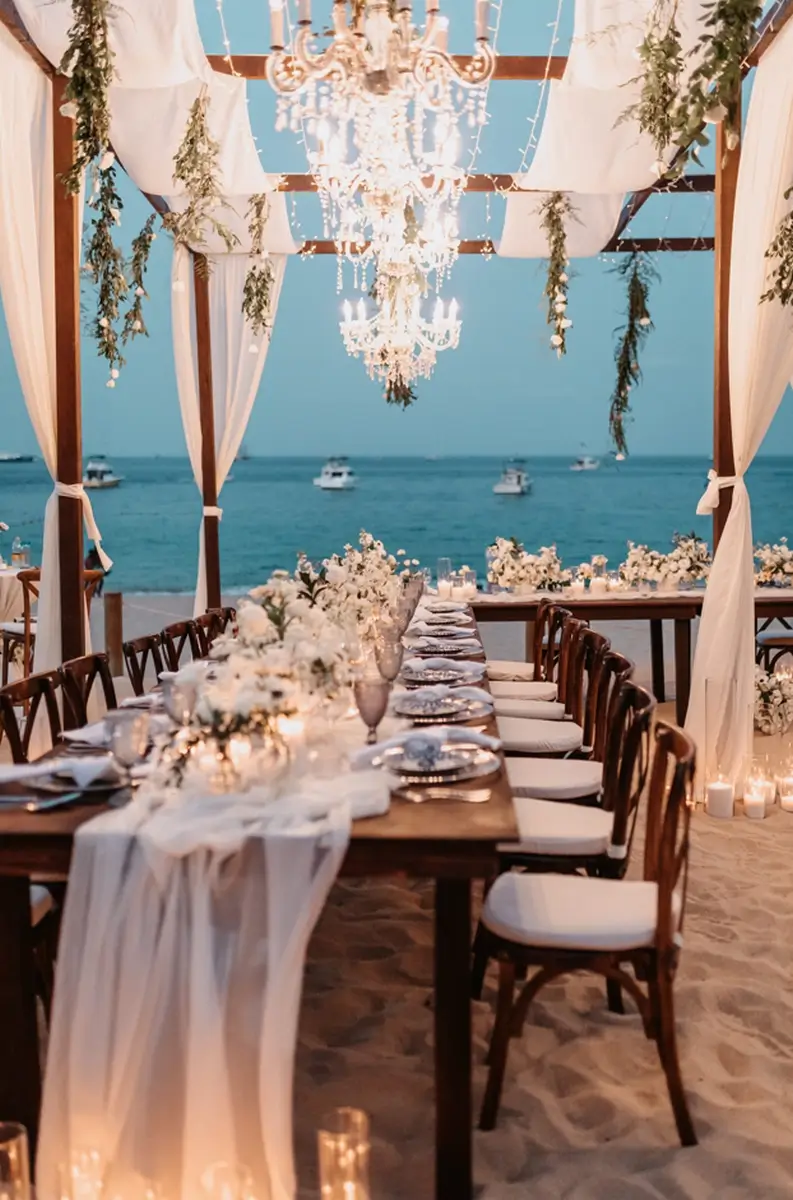
When reserving a restaurant exclusively for a wedding, the property will generally require a minimum food and beverage consumption, along with a location or venue fee.
As a general reference:
- Food & Beverage Minimum Consumption: Approximately $25,000–$45,000 USD, plus applicable taxes and service charges.
- Location or Venue Fee: Approximately $4,500–$10,000 USD, when applicable.
The minimum consumption represents the required food and beverage spending for the private event. The actual investment will depend on the restaurant, menu, bar selections, guest count, and event arrangements.
Some beautiful examples include:
Each of these three options offers a different kind of experience. Our job at this stage is to help couples understand those differences and determine which setting makes the most sense for their vision, priorities, guest count, and investment.
Because the decisions made here will influence practically everything that follows.
Building the Wedding Team Before Building the Design
Once the location and general wedding plans have been established, the next step is assembling the vendor team.
This is where the different areas of the celebration begin to take shape: photography, videography, entertainment, beauty services, ceremony officiant, catering, and all the other professionals who will contribute to the wedding weekend.
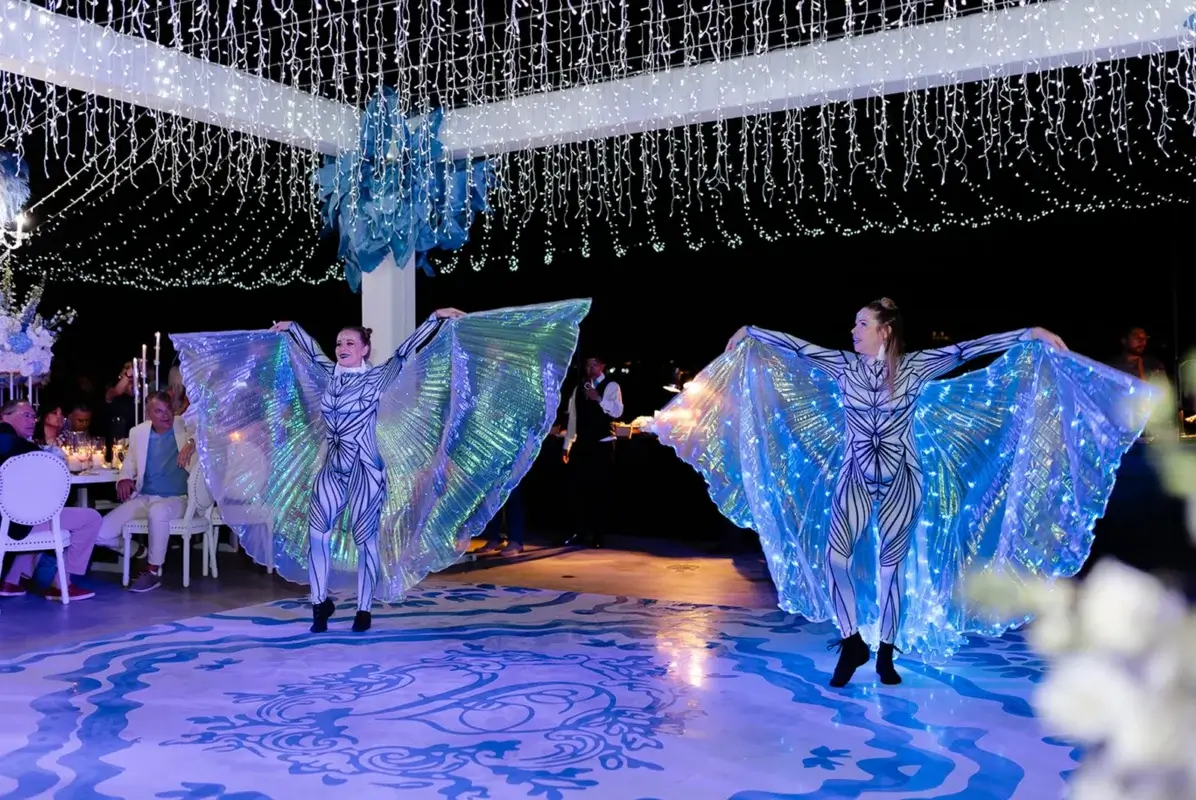
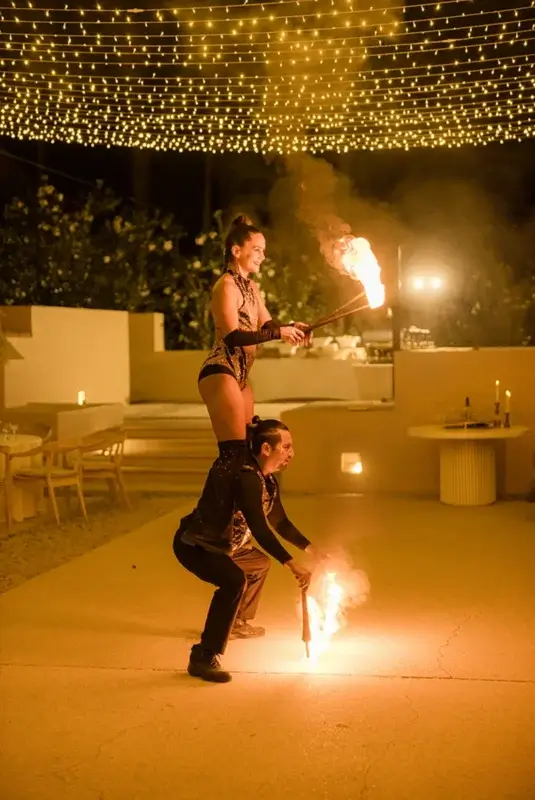
The team is not simply a collection of vendors. Each professional has a specific role, schedule, technical requirements, and coordination needs.
For budgeting purposes, here are some average pricing references for commonly requested wedding services in Los Cabos:
| Service | Average investment |
| Minister | $550–$650 USD + tax |
| Photographer (6 hours) | $4,000–$15,000 USD + tax |
| Videographer (6 hours) | $5,500–$16,500 USD + tax |
| Hair & Makeup (per person) | $400–$500 USD + tax and service charge |
| DJ (6 hours) | $3,500–$5,000 USD + tax |
| Live Band (3 sets) | $7,500–$10,000 USD + tax |
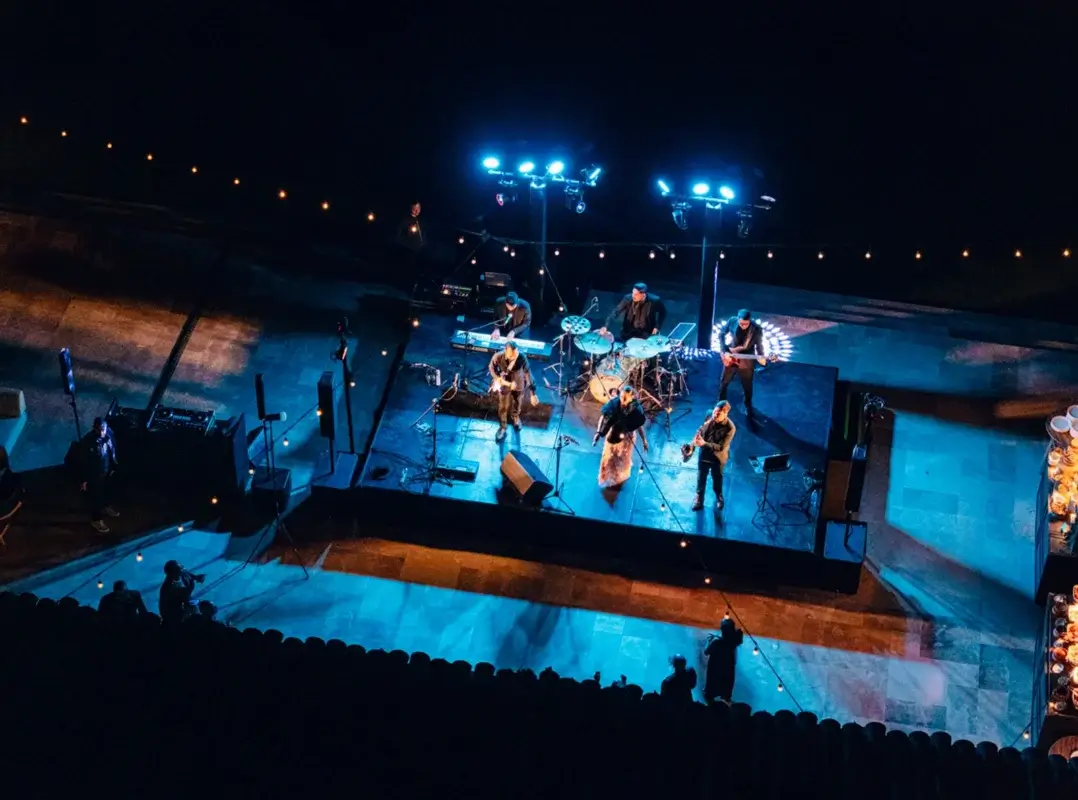
These figures are general market references. Final pricing will depend on the selected professionals, availability, coverage, production requirements, and individual preferences.
With the venue selected and the general structure of the wedding established, we can begin moving into the next part of the process.
And this is where the design team comes in.
The Design Process: From an Idea to a Fully Developed Concept
A wedding design should never be developed in isolation from its surroundings.
A floral installation that looks extraordinary in one venue may not be the right solution for another. A reception layout that works beautifully on a flat terrace may require an entirely different approach on a sloped property or a rocky beach platform.
This is why we first need to understand the location, its existing architecture, dimensions, restrictions, available inventory, natural surroundings, and production possibilities.
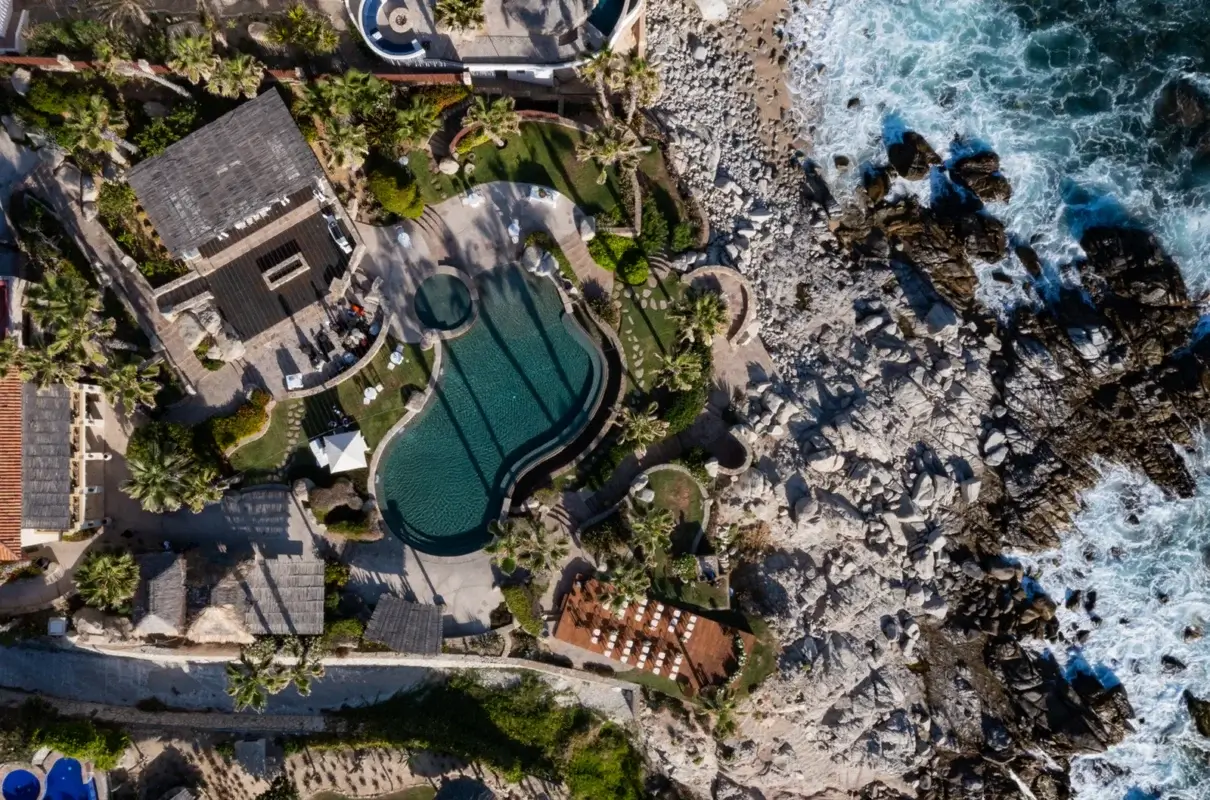
Only then can we begin developing a design that makes sense for that particular space and for the experience the couple wants to create.
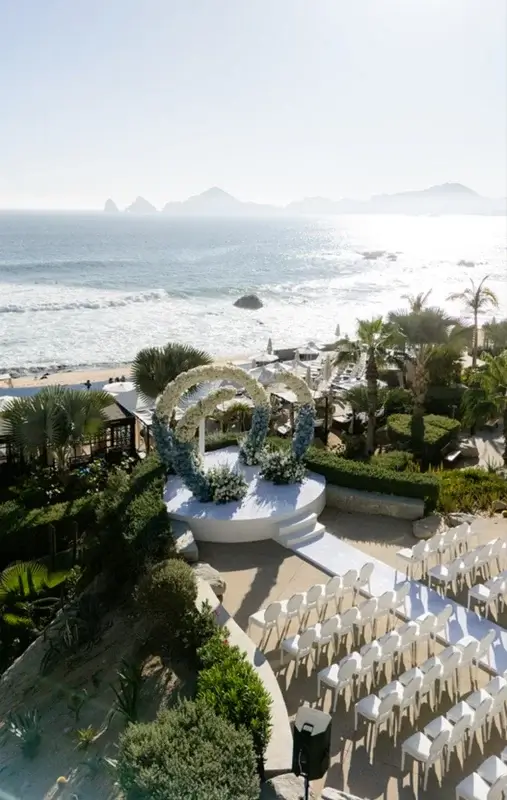
We start translating the couple’s inspiration, preferences, and priorities into a cohesive visual direction. This includes the ceremony setting, cocktail hour, reception, dining arrangements, floral design, furniture, lighting, decorative installations, signage, and all the details that will contribute to the overall atmosphere.
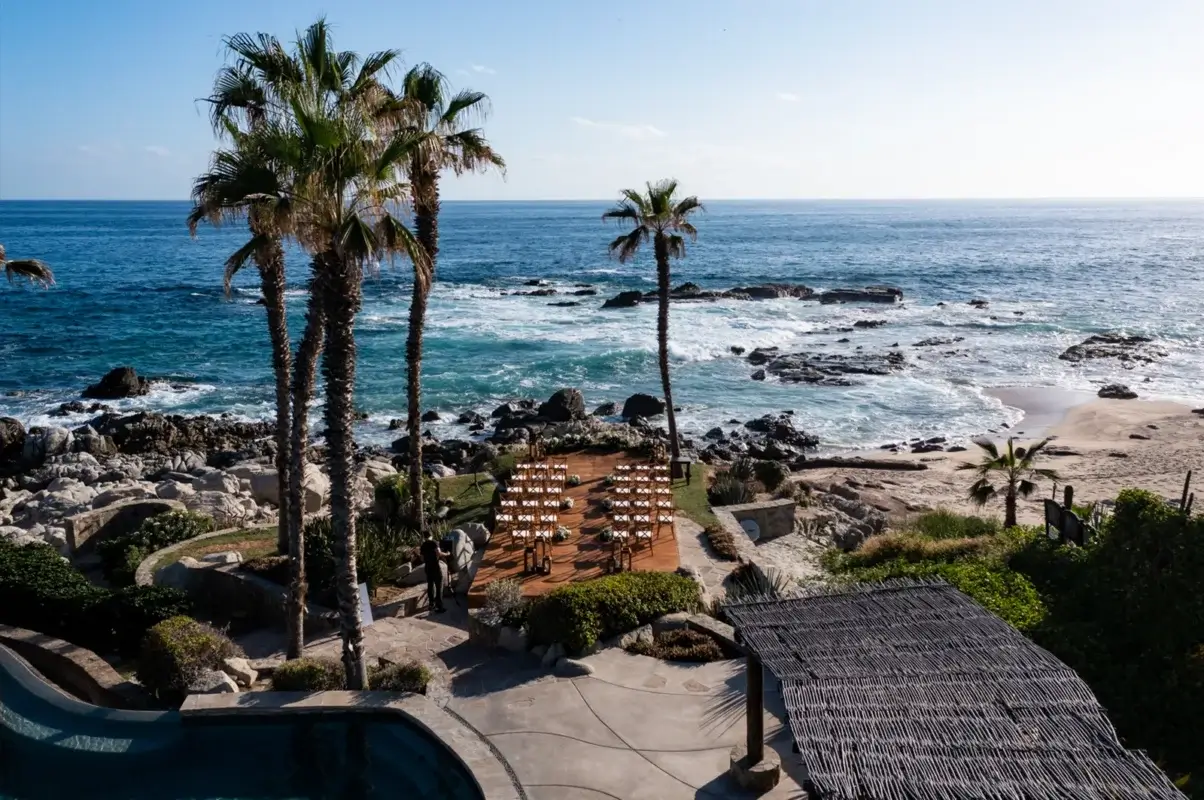
A moodboard is an important part of this process, but it is not simply a collection of pretty pictures.
It is a visual development tool that helps establish the direction of the project and identify the elements required to achieve it.
And once that direction is developed, we begin breaking it down.
From the Moodboard to the Actual Production
This is often the part of the process that is less visible to couples when they first begin exploring wedding design.
Once the concept is established, each element needs to be identified, sourced, quoted, reviewed, and coordinated.
A tablescape, for example, is not just a table and a few decorative pieces.
It may involve selecting the appropriate table shape and dimensions, chairs, linen, napkins, chargers, dinnerware, flatware, glassware, candles, floral arrangements, and customized stationery or artwork.
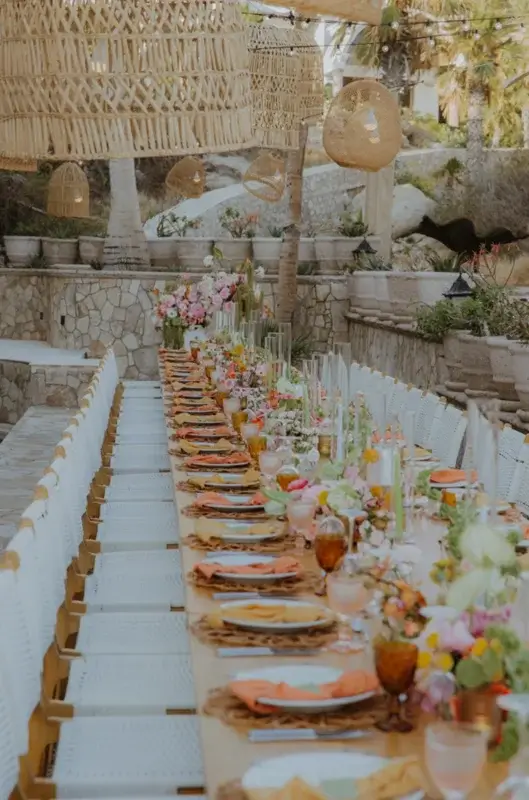
Then there is the question of how everything will be arranged, how it will look together, how much space it requires, and how it will be installed within the selected venue.
The same applies to larger production elements.
A canopy of fairy lights, for instance, involves more than selecting a lighting fixture. It requires understanding the installation area, structure, suspension points, electrical requirements, technical equipment, crew, installation time, and venue restrictions.
And these are just two examples.
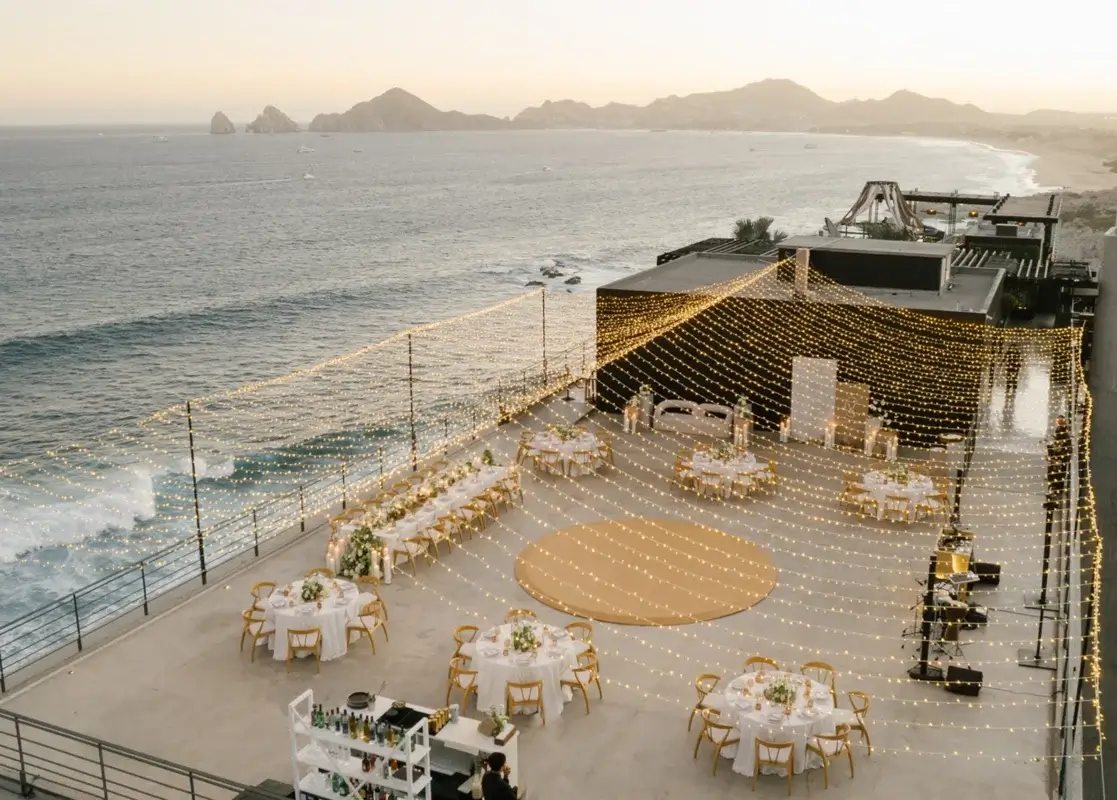
After the design has been developed, we create itemized quotes that account for the elements included in the concept, from the smallest votive candle on a dinner table to an extensive lighting installation above the reception.
This is also when we evaluate alternatives. Sometimes a venue already has furniture, architectural features, lighting, or other elements that can be incorporated into the design. In other cases, custom rentals or additional production are necessary.
The objective is not to fill a space with as many items as possible. It is to determine what the space needs to become the experience we envisioned.
Understanding the Investment Behind Wedding Design & Production
Design and styling can represent one of the largest investments in a destination wedding, although that is not necessarily the case for every celebration.
It depends on the couple’s priorities, the complexity of the design, the guest count, the selected venue, and the level of customization and production involved.
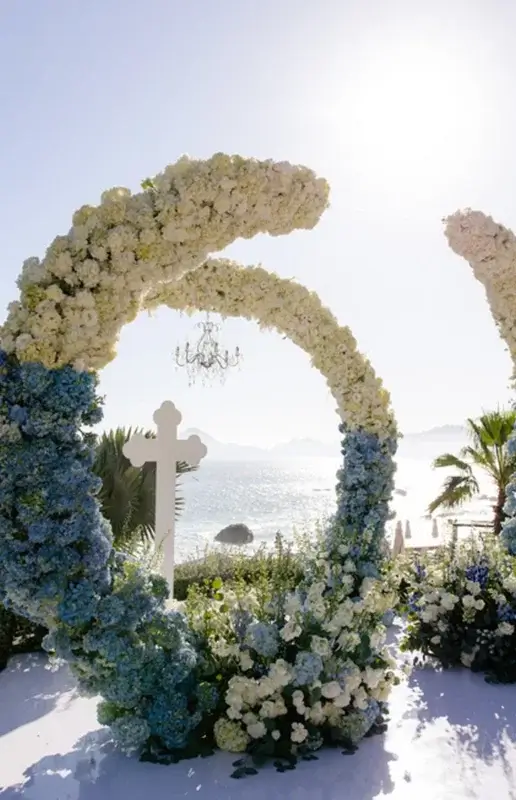
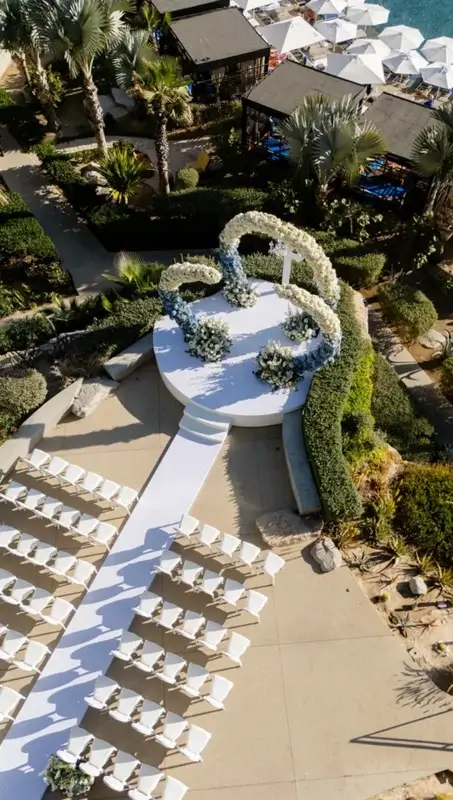
For general budgeting purposes, these are some average investment ranges we commonly work with:
Design & Production Category | Average investment |
| Florals | $10,000–$50,000 USD or more |
| Rentals | $15,000–$30,000 USD or more |
| Lighting & Production | $5,000–$30,000 USD or more |
| Signs & Custom Artwork | $1,000–$5,000 USD or more |
These are broad planning references, not package prices. Every wedding has a different scope, and the final investment is determined by the actual design and production requirements.
It is also worth understanding that the rental portion is only one component of the design.
Having a quote for tables, chairs, linens, and decorative accessories does not establish how those elements will work together, whether they are appropriate for the venue, or what additional production is needed to execute the concept.
That is the difference between sourcing individual items and developing a complete design and production plan.
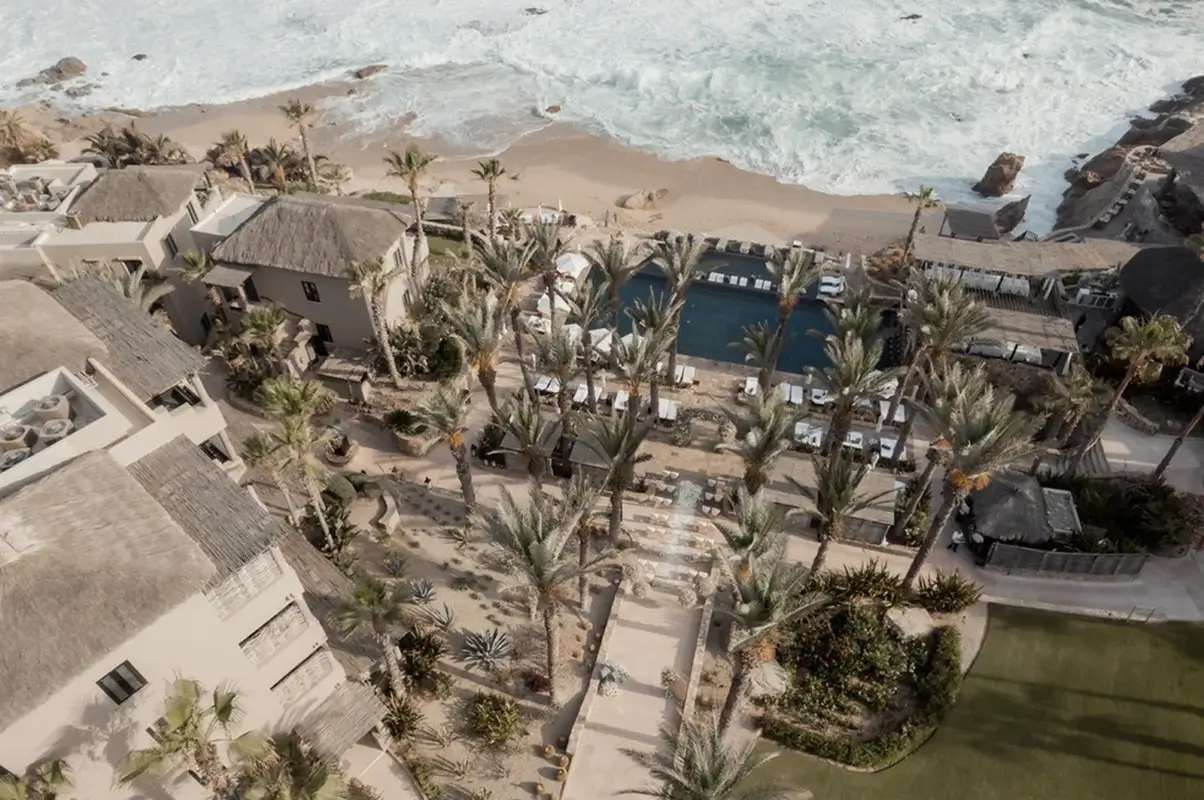
So, What Actually Happens Behind a Wedding?
By the time the wedding day arrives, the couple sees the finished result: the ceremony setting, the flowers, the beautifully arranged dinner tables, the lighting, the music, and the atmosphere surrounding their celebration.
What they don’t necessarily see is the process that brought all those elements together.
The venue research, the planning meetings, the design development, the moodboards, the measurements, the vendor coordination, the itemized quotes, the production schedules, the installation requirements, the logistics, and the countless decisions made along the way.
Every individual element has a purpose, and every decision contributes to the bigger picture.
A rental company can provide the pieces needed for an event. A planning and design firm works to determine which pieces are needed in the first place, why they belong there, how they should come together, and what it will take to make the entire concept happen.
At Creative Destination Events, we approach wedding planning, design, and production as interconnected parts of the same process.
Because, ultimately, we are not simply putting together a collection of rental items.
We are creating an experience, one decision, one detail, and one carefully coordinated element at a time.